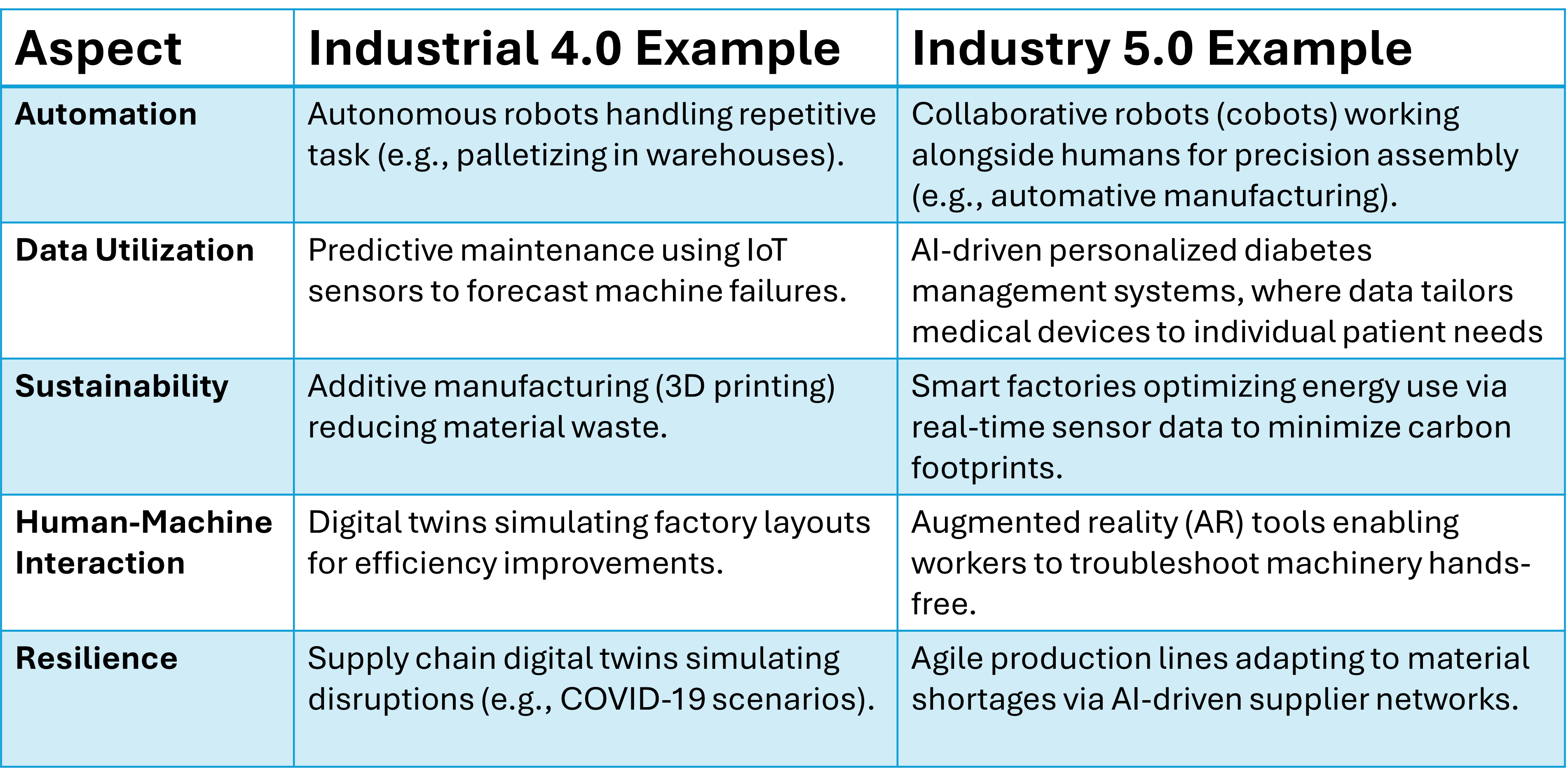
Industry 4.0 asked "can we digitize and automate this?" Industry 5.0 asks "should we, and who does it serve?" Less new shiny tech, more about what you do with the tech you already have. Here's a short readiness check.
The 5.0 operator doesn't need to code — but they need to read a dashboard, interpret an anomaly, and know when to override automation. Make it safe to flag when the automation is wrong; cultures that punish overrides hide real problems.
Sustainability is a design constraint, not a PR line. Meter energy at the line level — you can't optimize what you don't measure. Switch off what doesn't need to be on (the problem our Smart Occupancy Controller, currently in development, is built to solve). Track carbon alongside cost.
The biggest "smart factory" blockers are organizational, not technical. Use MQTT and OPC-UA to bridge legacy controllers without ripping and replacing. Agree on a shared security model before you connect the network, not after.
The last few years made this obvious. Dual-source critical components. Digitize supply-chain visibility so problems surface early. Build traceability into the product, not just the process.
The thread through all of the above: technology in service of people. Involve operators in the design of the systems they'll use. Ergonomics and cognitive load are design inputs, not posters.
You don't need all five at once. The three highest-return first moves we see:
Want a read on where your factory stands? Talk to us.
A 30-minute call usually surfaces the two or three moves worth making first.